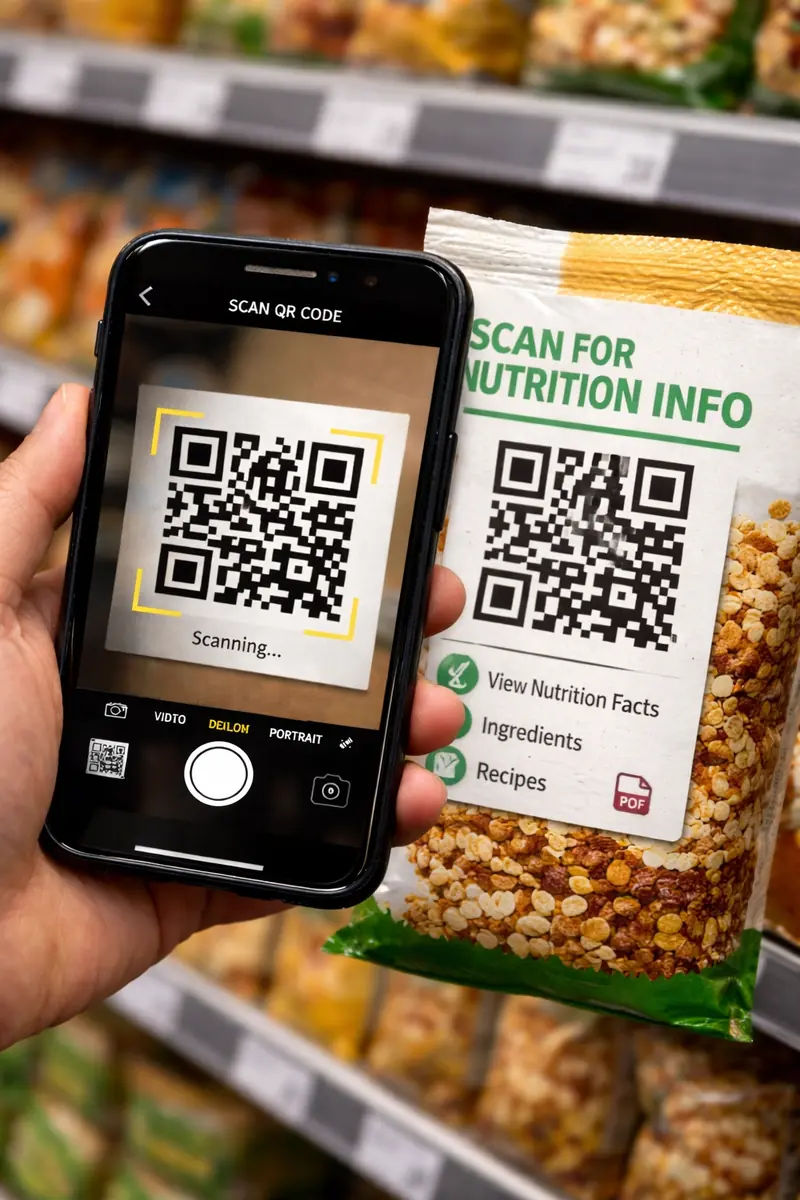
Why added sugar is so hard to spot
You want to eat a bit healthier. You start checking ingredient labels. And then you realize: it's not that simple.
Added sugar isn't only used to make food sweet. Manufacturers add it to improve texture, extend shelf life, boost browning, and mask bitterness — especially in "low-fat" or heavily processed products.
The result: added sugar shows up under dozens of names, and it's often split into multiple ingredients so no single "sugar" appears near the top of the list.
The good news? Once you know the patterns, it gets much easier. Here are the 7 things to look for.
If you spot two or more sugar sources in the ingredient list, treat it as a sugary product — even if the front claims "healthy."
Step 1: Read the nutrition label (correctly)
Many labels distinguish between:
- Total sugars — includes naturally occurring sugar and added sugar
- Added sugars — sugar added during processing
Example:
Total Sugars: 16g
Includes 12g Added Sugars
That means most of the sugar wasn't naturally present in the ingredients.

Always check the serving size — many packages contain 2-4 servings
Simple guideline: If a serving has > 5g added sugar, it's already in "high-ish" territory for everyday foods.
Step 2: Ingredient lists reveal the truth
Ingredients are listed by weight, from most to least. If sugar (or a sugar-like ingredient) appears in the first 3 items, it's a major part of the product.
The "multiple sugars" trick
Instead of listing one sugar, manufacturers split it:
Ingredients: oats, honey, cane sugar, glucose syrup, apple juice concentrateEach sugar looks small — but combined, they can outweigh other ingredients.
Detection rule: If you see 2+ sugar sources, assume the product is sugar-forward.
Step 3: Learn the most common names for added sugar
Here are 5 of the most common words U.S. manufacturers use to label added sugar on ingredient lists:
The top 5 most common added sugar labels
- Sugar — Plain "sugar" usually means refined cane or beet sugar.
- High-Fructose Corn Syrup (HFCS) — Very common in sodas, snacks, and sauces.
- Corn Syrup / Corn Syrup Solids — Used in candies, baked goods, and cereals.
- Cane Sugar / Cane Juice / Evaporated Cane Juice — Sounds more "natural," but it's still added sugar.
- Dextrose — A form of glucose, often used in processed foods and sports drinks.
- Glucose, fructose
- Rice syrup, malt syrup
- Agave nectar, maple syrup
- Coconut sugar, date syrup
- Fruit juice concentrate
"-ose" endings are often sugars (glucose, dextrose, fructose).
"syrup" is almost always added sugar.
"concentrate" can be a sugar source when it's a juice concentrate.
Tip: On U.S. labels, ingredients are listed by weight. If you see multiple types of sugar, it usually means the product is very high in added sugar.
Don't want to memorize all these names?
SugarFlag scans ingredient labels for you and catches all 60+ sugar aliases in 3 seconds. Available now on iOS.
Step 4: Don't trust front-of-package claims
These phrases can still hide plenty of sugar:
- "No refined sugar"
- "Naturally sweetened"
- "Made with real fruit"
- "Organic sugar"
- "No added cane sugar"
Rule: Ignore marketing. Verify with the ingredients list and the added-sugars line.
Step 5: Sugar hides in unexpected foods
Added sugar commonly appears in "everyday" products, including:
- Bread and wraps
- Pasta sauces
- Ketchup / BBQ sauce
- Salad dressings
- Flavored yogurt
- Breakfast cereals
- Plant-based milk
- Deli meats / sausages

If it's processed, assume sugar until proven otherwise
Step 6: Serving-size math (the silent trap)
A label might show:
Added Sugars: 4g
Serving size: 1/2 bar
If you eat the whole bar, that's 8g added sugar.
Habit: Multiply sugars by how much you actually eat — not what the label hopes you'll eat.
Step 7: "Low-fat" often means "high sugar"
When manufacturers remove fat, they often add sugar to keep taste and texture appealing.
- Low-fat yogurt
- Fat-free salad dressing
- Reduced-fat snacks
Practical tip: Compare the regular and low-fat versions — the whole-fat option is often lower in sugar and more filling.
Printable Sugar-Detection Checklist
Use this in the store, or print it out
1) Nutrition label
2) Ingredient list
3) "Healthy" sugars (still sugar)
4) Category red flags
Bonus rule: The shorter and more familiar the ingredient list, the less likely it contains hidden added sugar.
Or skip all 7 steps and scan it
Everything above works — but it takes time and practice. If you'd rather just get a quick answer while you're shopping, that's exactly what SugarFlag is for.
Take a photo of any ingredient label. The app reads it, checks for all 60+ sugar names, and gives you a clear verdict in about 3 seconds:
- ✅ No added sugar
- ❌ Contains added sugar
No memorizing, no squinting, no math. Just clarity at the shelf.
Awareness beats restriction
You don't need perfection. You just need to know what's in your food — whether you learn the manual way or let an app help you. Once you start choosing based on facts instead of packaging, everything changes.
Hidden sugar thrives on confusion. Clarity takes its power away.